The MARKK houses a collection of nearly 1,300 popular Chinese prints, which constitutes one of the most significant collections of its kind in Germany and Europe. The majority of these so-called ‘New Year pictures’ (nianhua 年畫) came to the former Hamburg Museum of Ethnology in the early 20th century as a result of extensive ethnographic collecting, and were intended to serve as material evidence of the intellectual and imaginative world of ‘China’. Consequently, depictions of popular deities as well as traditional tales and myths, produced in the medium of woodblock printing—which was regarded as ‘authentically Chinese’—were particularly sought after.
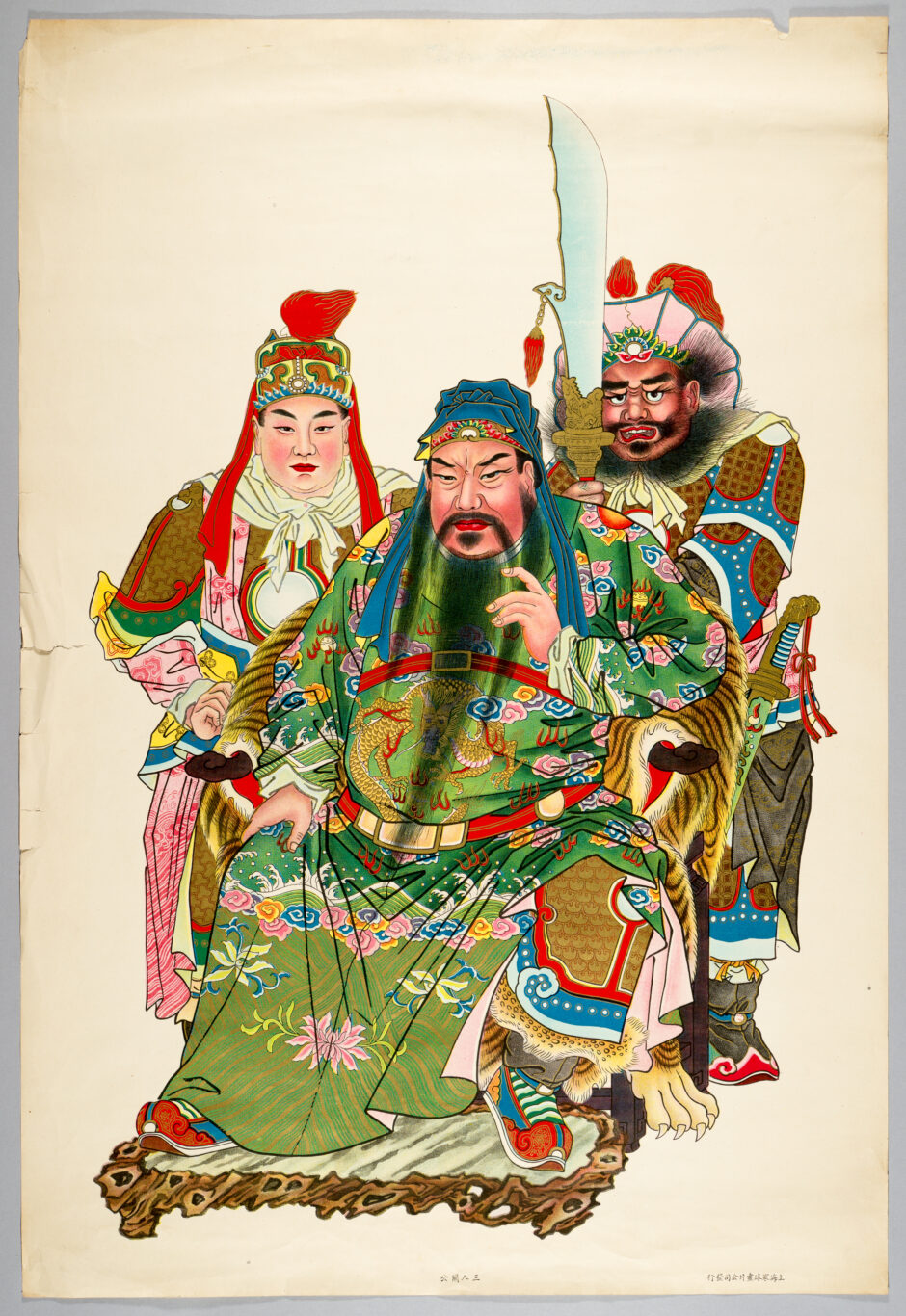
In a notable departure from the holdings of other ethnological museums, however, the MARKK collection includes not only woodblock-printed New Year’s pictures but also some 360 offset prints featuring traditional Chinese motifs. These were mass-produced by Shanghai printing firms in the early 1930s. They did not conform to the ethnological collection paradigm prevalent at the time, which makes this collection virtually unique worldwide. However, following its entry into the collection in 1932 and its presentation in the ‘Special Exhibition on Chinese Folklore’ in 1933, this collection of prints was not catalogued scientifically.
The collection raises the question of the criteria by which material Chinese cultural artefacts were acquired and collected by the Museum of Ethnology, and why the Hamburg criteria – with regard to China – apparently deviated significantly from the ethnological paradigm of the time.
A clue to this may be found in the provenance of the prints: a large proportion were purchased by Prof. Dr Theodor W. Danzel (1886–1954) in Nanjing in the early 1930s, where the then head of department at the Museum of Ethnology, at the invitation of Cai Yuanpei (1868–1940), assisted in establishing the Ethnological Department of the Academy of Sciences (Academia Sinica).
Through contact with Chinese ethnologists such as Ling Chunsheng (1901–1978), which also included an exchange of ethnographic objects between the two institutions, an understanding of Chinese prints as collection items emerged, leading to the preservation of these machine-printed works.
The main objective of the project, funded by the German Research Foundation (DFG), is to investigate this history of Sino-German interconnections in the early scholarly examination and interpretation of popular Chinese prints and visual popular culture between Hamburg and Nanjing. Furthermore, all prints in the collection are to be systematically catalogued, and their digitised versions, together with contextual information, made accessible via the museum’s website.
The project is being carried out by Dr Bernd Spyra (University of Freiburg) in cooperation with the MARKK. Funded by the German Research Foundation (DFG).


Contact:
Dr Bernd Spyra
Institute of Sinology, University of Freiburg
Email: bernd.spyra@sinologie.uni-freiburg.de
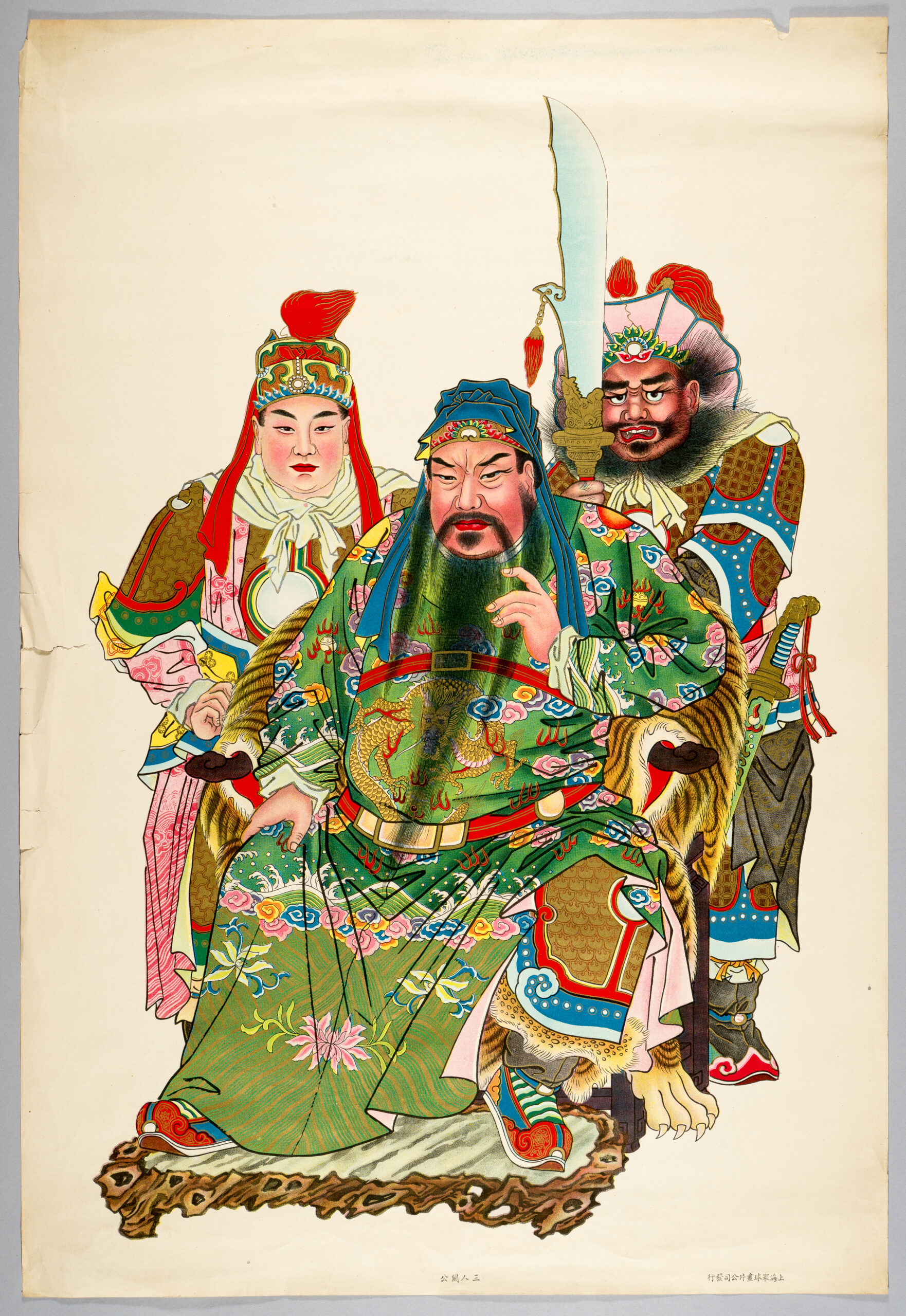
Offset print: Guan Yu, San ren Guangong 三人關公; China, before 1932; Inv. No. 35.59:155; © MARKK, Bernd Spyra.
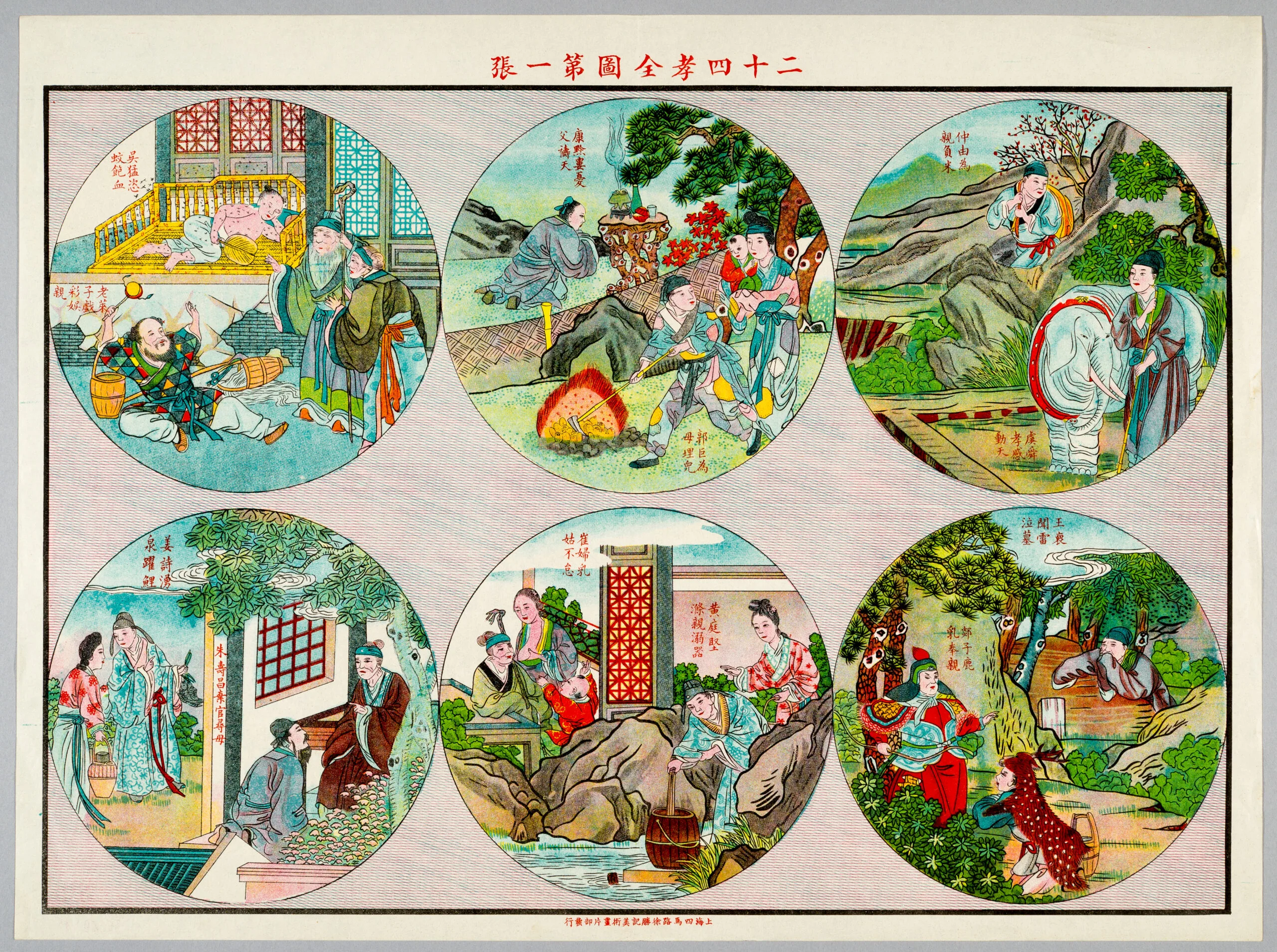
Offset print: 24 Stories of Filial Piety (sheet 1), Ershisi xiao quantu di yi zhang 二十四孝全圖第一張; China, before 1932; Inv. No. 35.59:15; © MARKK, Bernd Spyra.
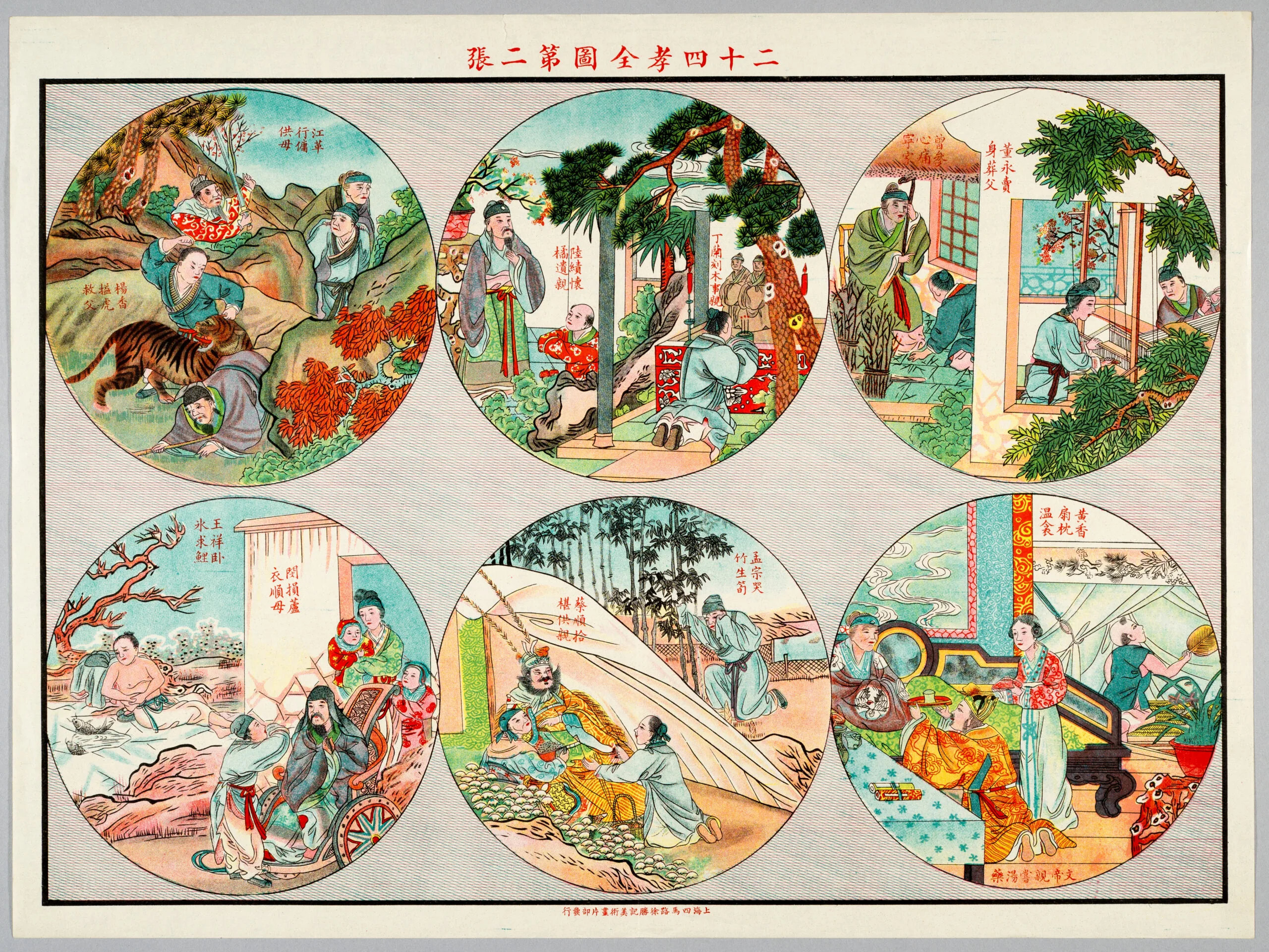
Offset print: 24 Stories of Filial Piety (sheet 2), Ershisi xiao quantu di er zhang 二十四孝全圖第二張; China, before 1932; Inv. No. 35.59:16; © MARKK, Bernd Spyra.
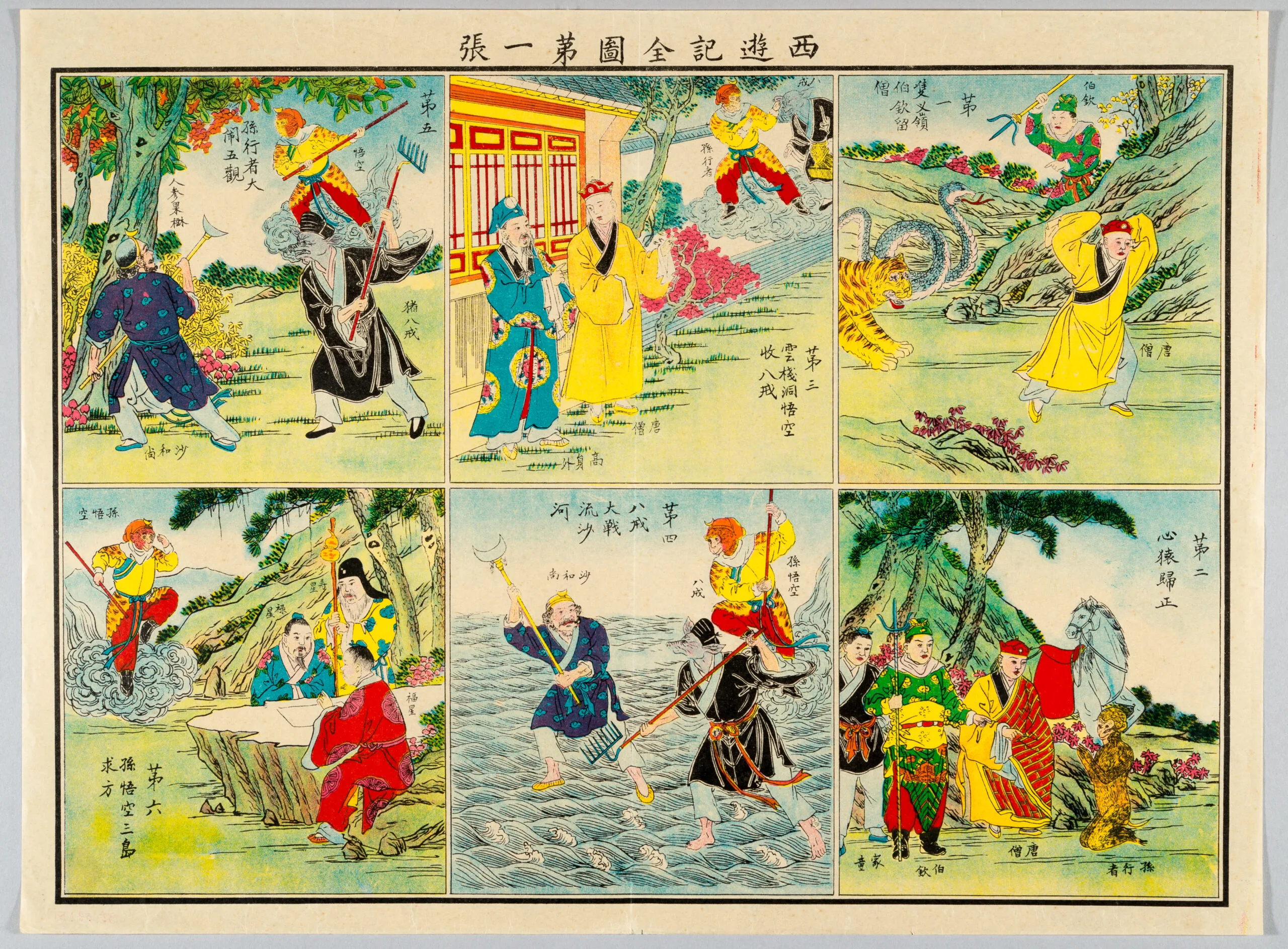
Offset print: Journey to the West (sheet 1), Xi you ji quantu di yi zhang 西游記全圖第一張; China, before 1932; Inv. No. 35.59:31;© MARKK, Bernd Spyra.
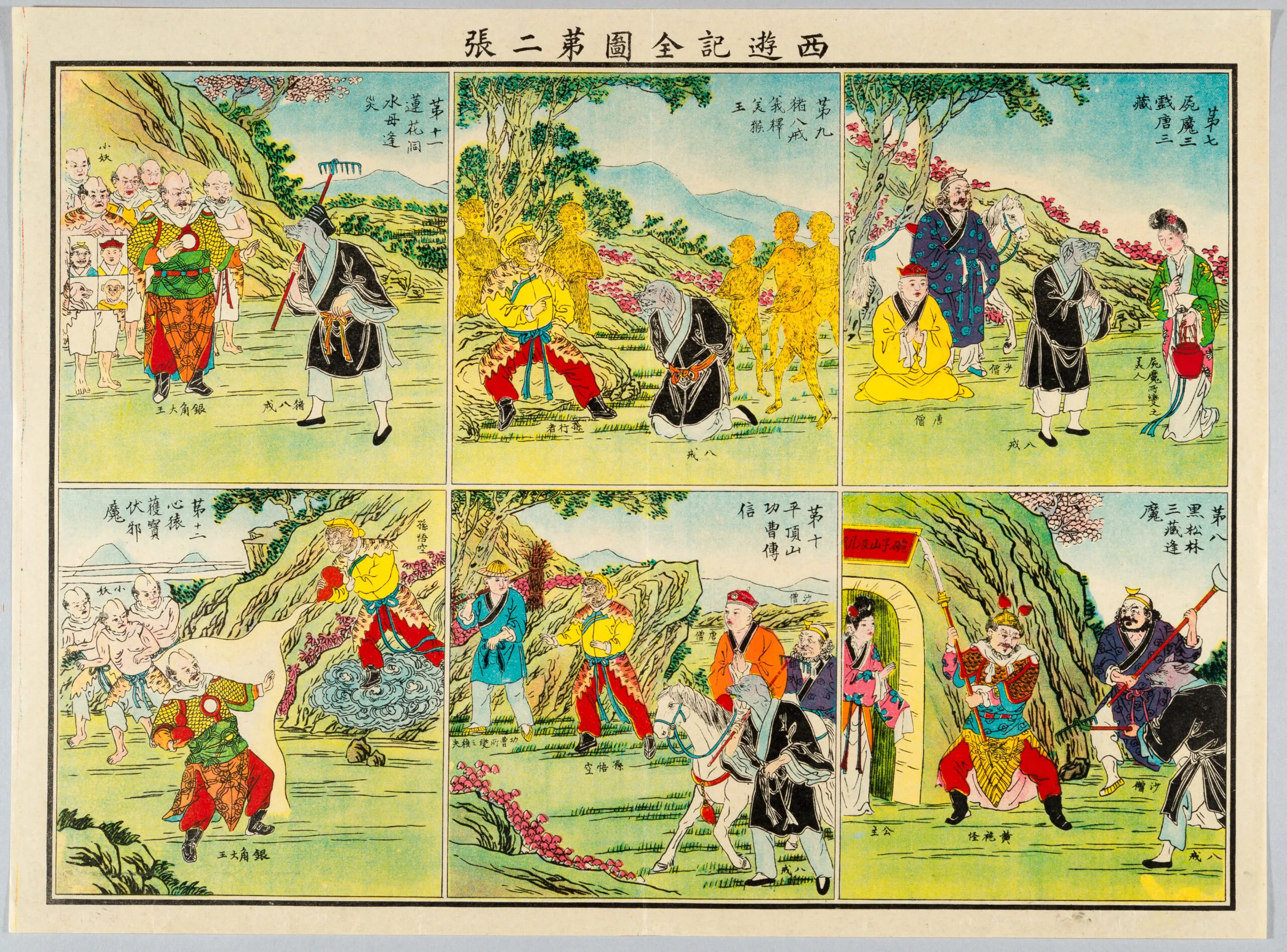
Offset print: Journey to the West (sheet 2), Xi you ji quantu di er zhang 西游記全圖第二張; China, before 1932; Inv. No. 35.59:32; © MARKK, Bernd Spyra.
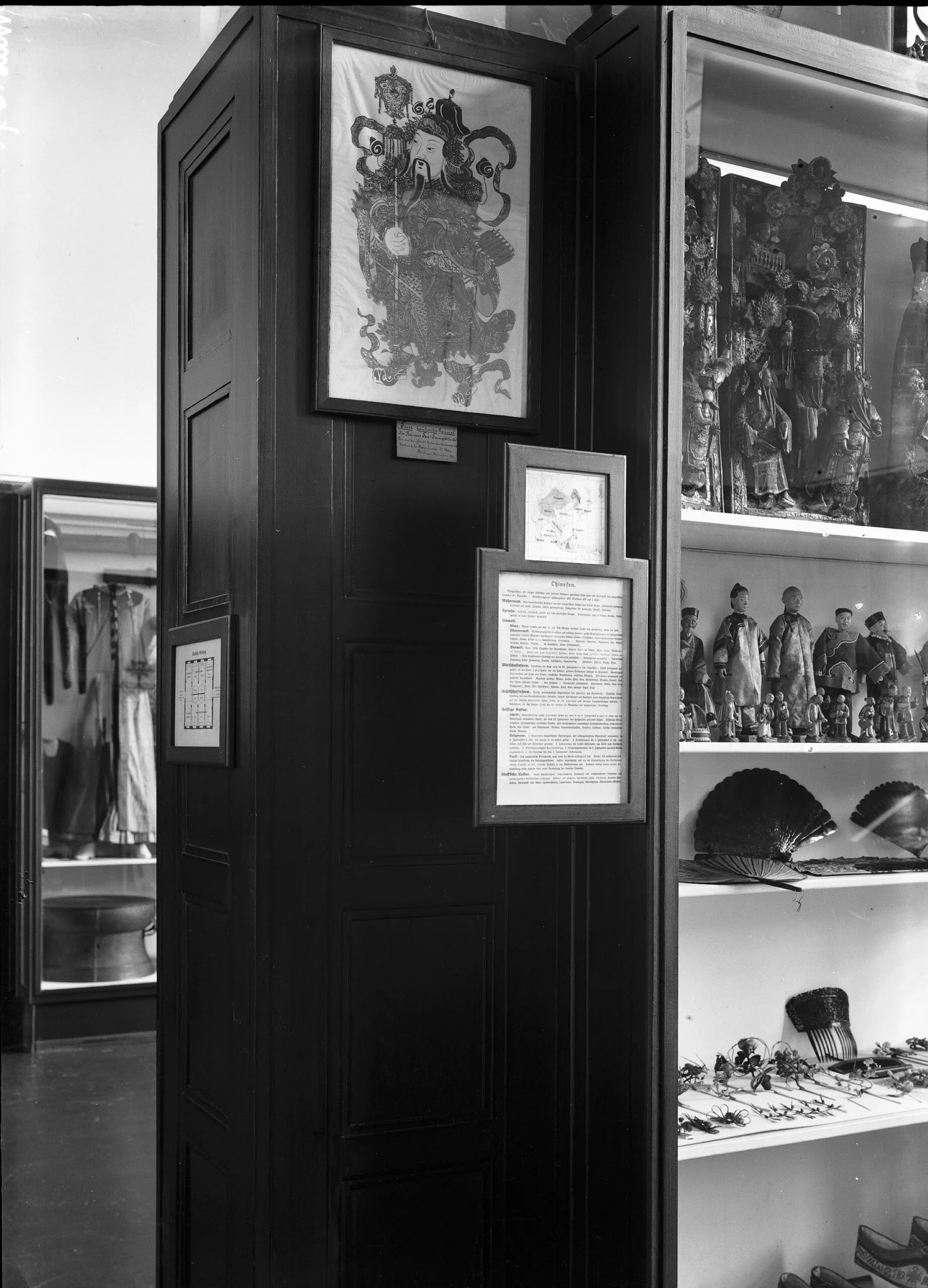
Chinese print in the East Asia exhibition hall of the Hamburg Museum of Ethnology, 1910s, Photo Archive Mus 67; © MARKK.
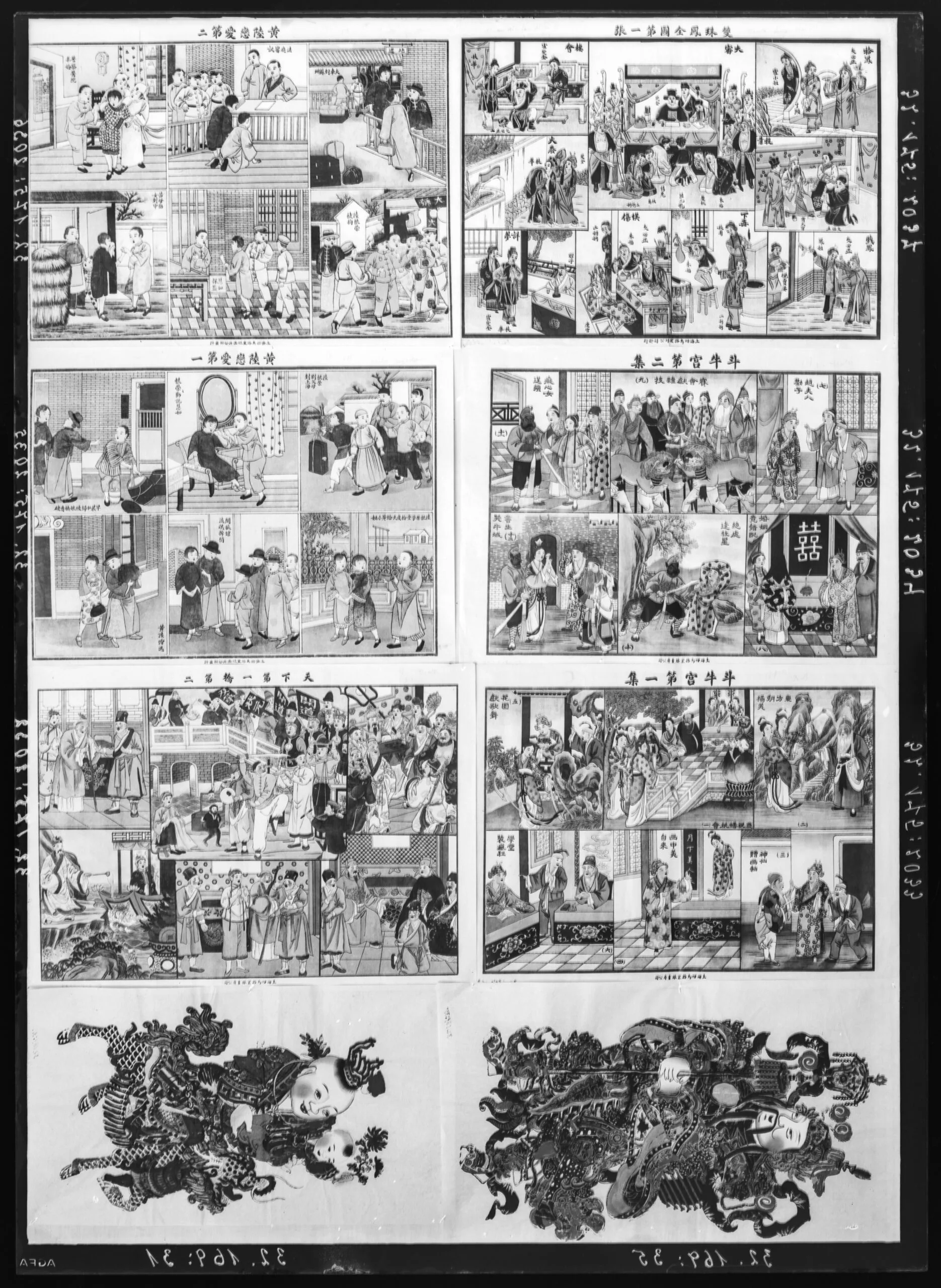
Inventory photograph of various Chinese woodblock and offset prints on glass plate negative, Hamburg Museum of Ethnology, 1930s; © MARKK.
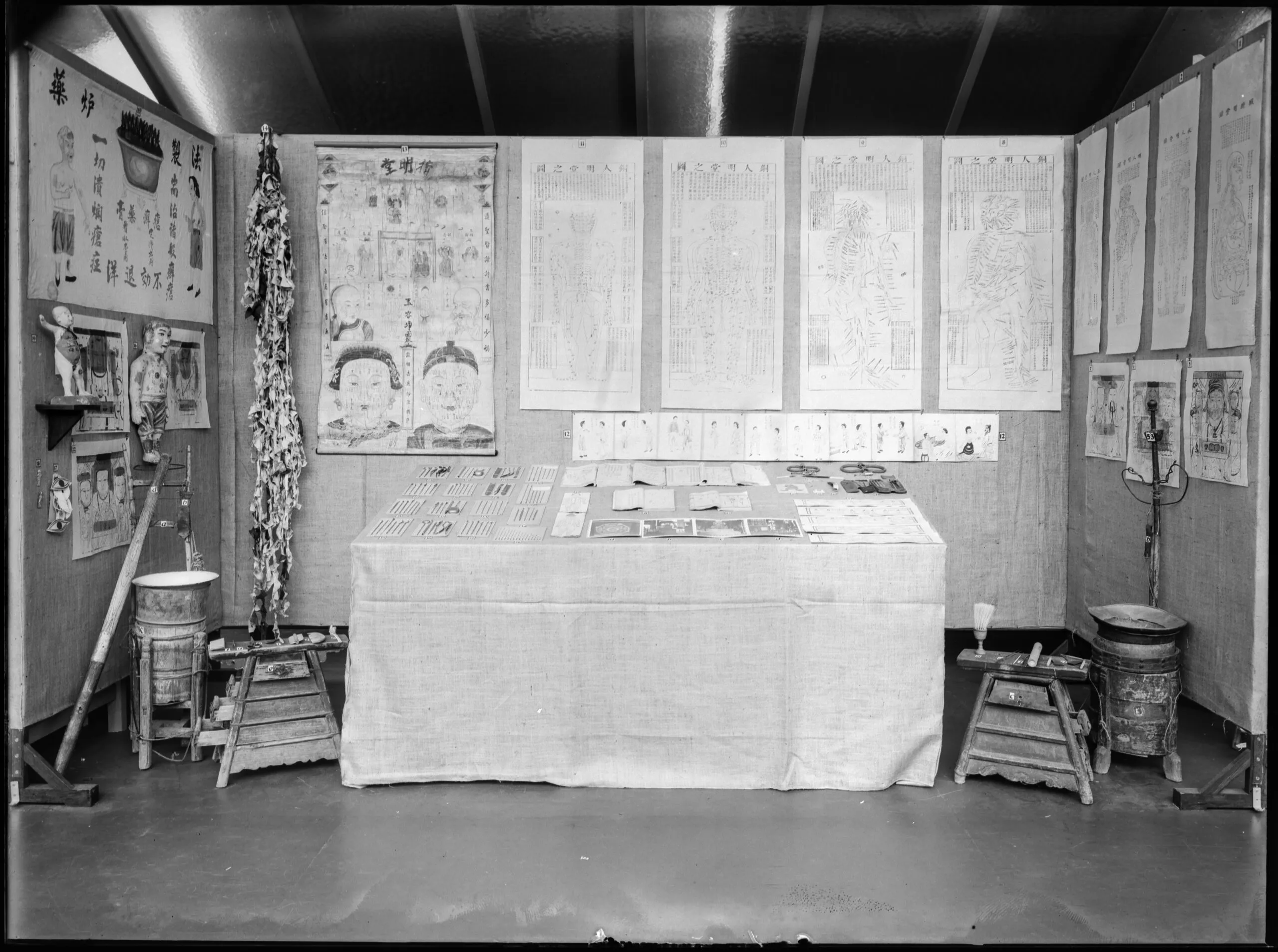
View of the ‘Special Exhibition: Chinese Folklore’ featuring various woodblock prints, Hamburg Museum of Ethnology, 1933; © MARKK.