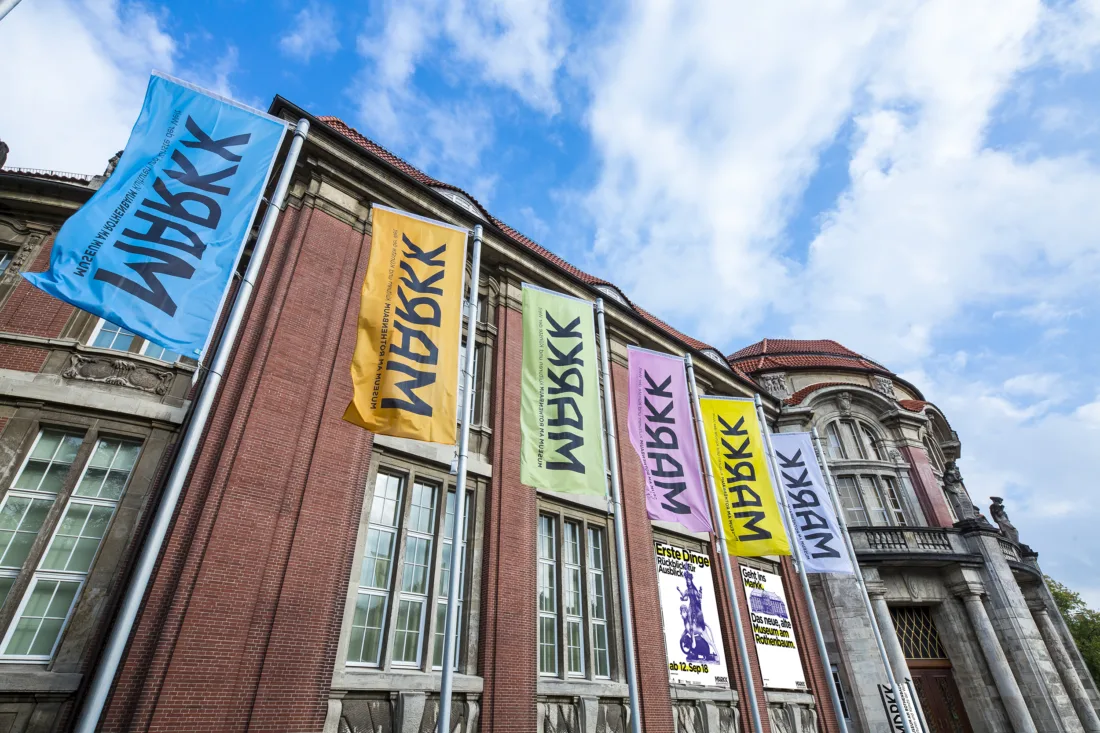
6 – 7 October, 2022, Museum am Rothenbaum – Kulturen und Künste der Welt
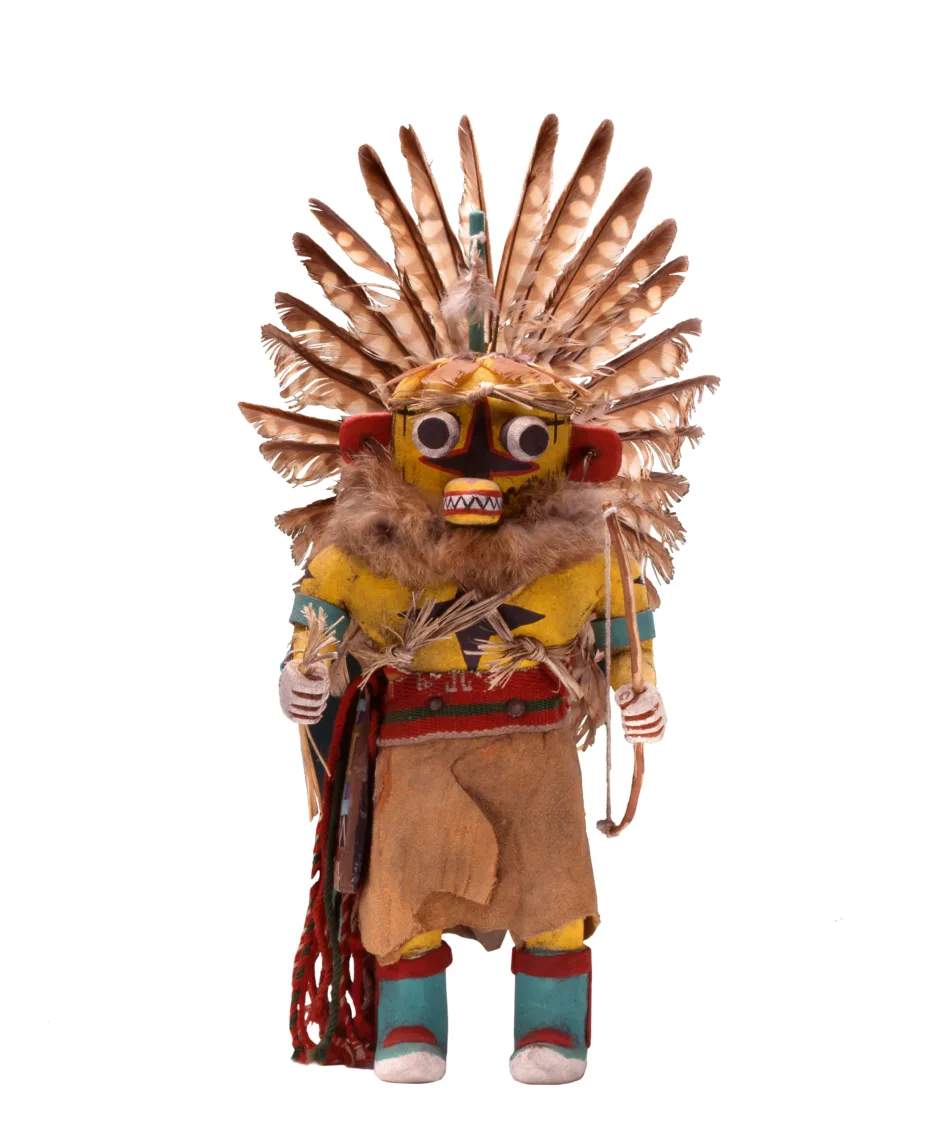
The symposium, which is connected to the current exhibition “Lightning Symbol and Snake Dance. Aby Warburg and Pueblo Art” (öffnet in neuem Tab) (MARKK) and the students’ online exhibition “Die Wanderer. Katsinam, Tithu und Aby Warburg” (Goethe-Universität, www.diewanderer.info) will discuss the representation of Hopi culture, Katsinam, and, specifically, tithu (known as Katsina dolls or figures). The main question is how the latter should be represented between the poles of ethnography, art, religion, and Hopi culture. What are the possibilities for appropriate representation in light of the ongoing process of decolonizing museums and academic institutions?
The main topics are:
1. The representation of these so-called Katsina Dolls (tithu). As representations of the supernatural Katsinam and given to girls as gifts at ceremonies, it has to be discussed if tithu, which have been commodified since the late 19th century, are some kind of teaching aid, toy, or sacred objects – or a combination of all. This will lead into a discussion how they can and should be handled and exhibited in museums.
2. The appropriation of Hopi art (particularly tithu) by Europeans and Euro-American artists, scholars, and museums (e.g. Aby Warburg, Emil Nolde, André Breton, Man Ray). In this context, the symposium will consider whether there are differences between the American and European views of the figures. Cultural transfer or cultural diffusion is also not a one-way street but occurs in many ways and in many different directions. Therefore, we will also ask whether the Europeans‘ and Americans‘ views of the artifacts has changed the Hopis’ view of these objects during the decades.
Even though the symposium focuses on Hopi culture, it will be an example of how museums and descendant communities can discuss problems of representation – particularly in the case of museum objects that are connected to the religious sphere.
The symposium is organized by Markus Lindner (Goethe-Universität Frankfurt), Hilja Droste (Rheinische Friedrich-Wilhelms-Universität Bonn) and Christine Chávez (MARKK Hamburg).



This project is made possible through support from the Terra Foundation for American Art and the Deutsche Forschungsgemeinschaft.